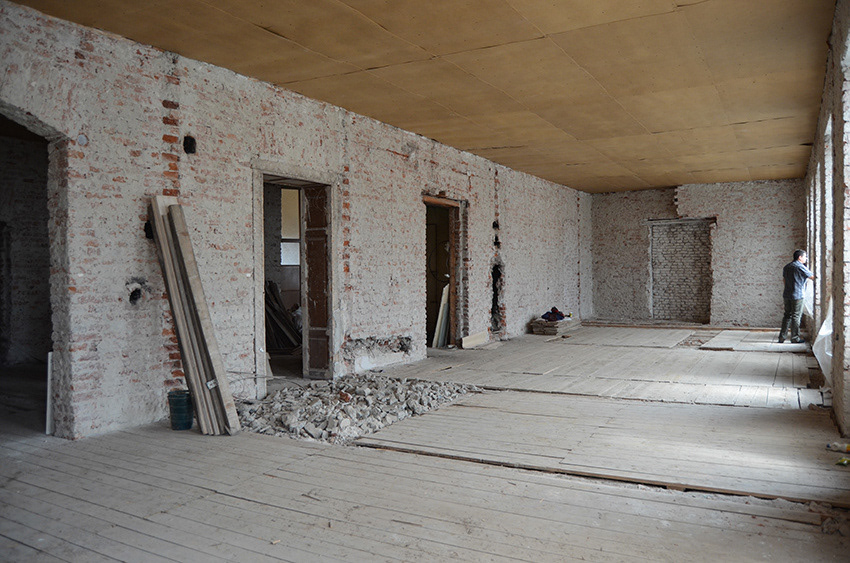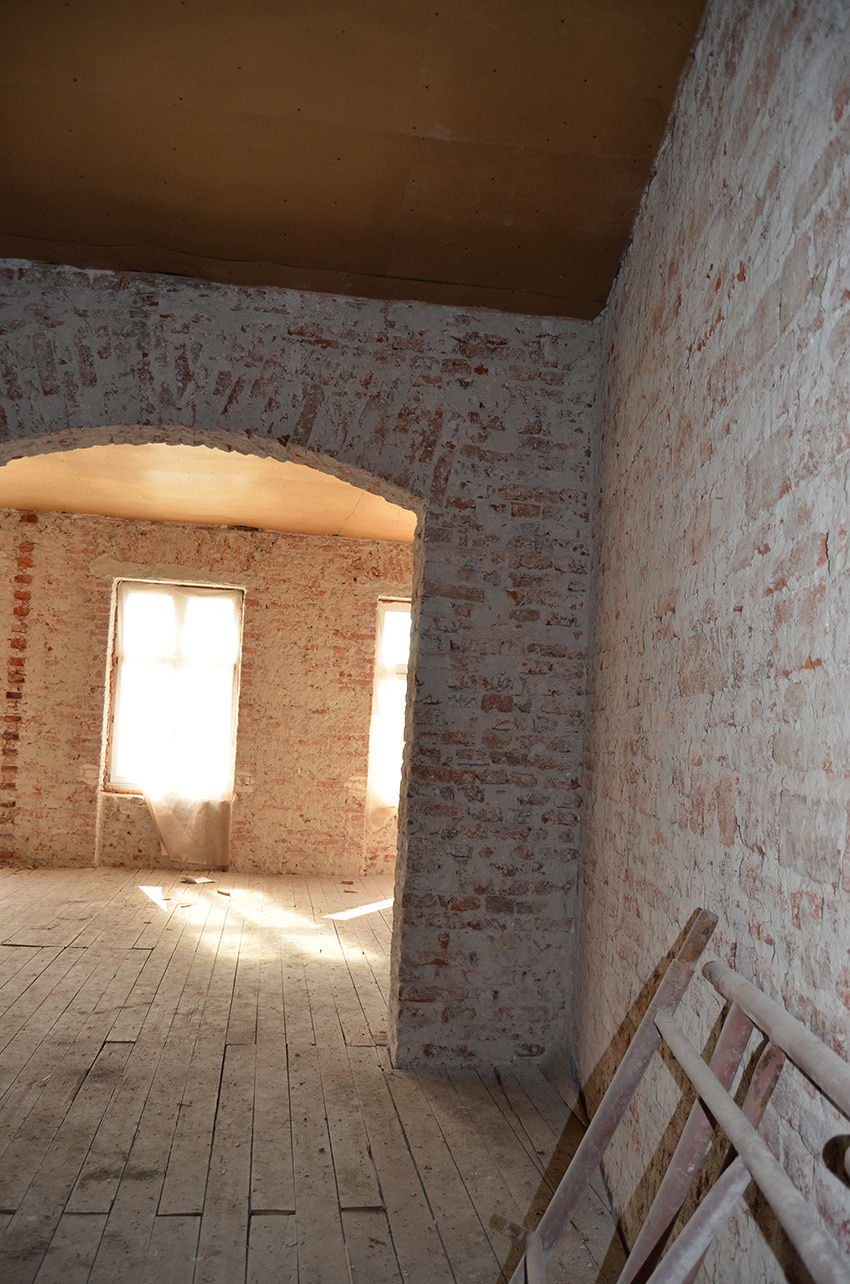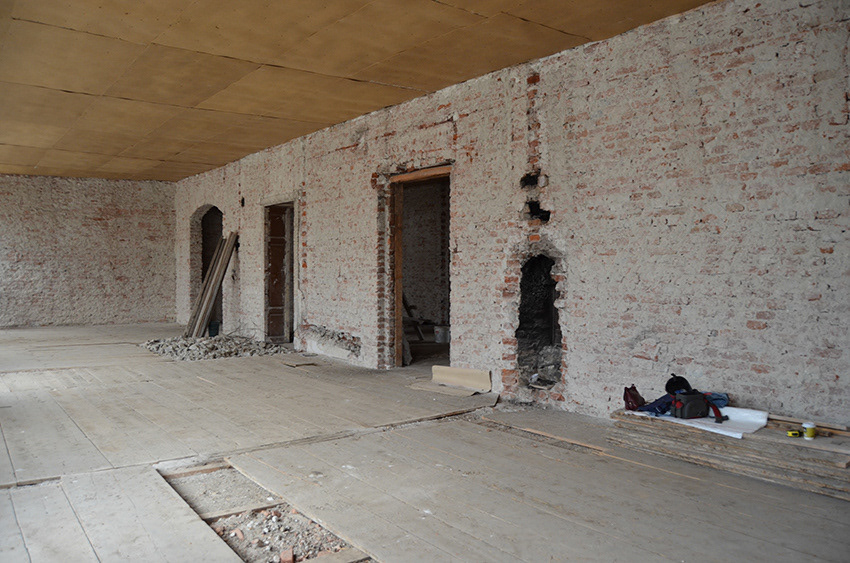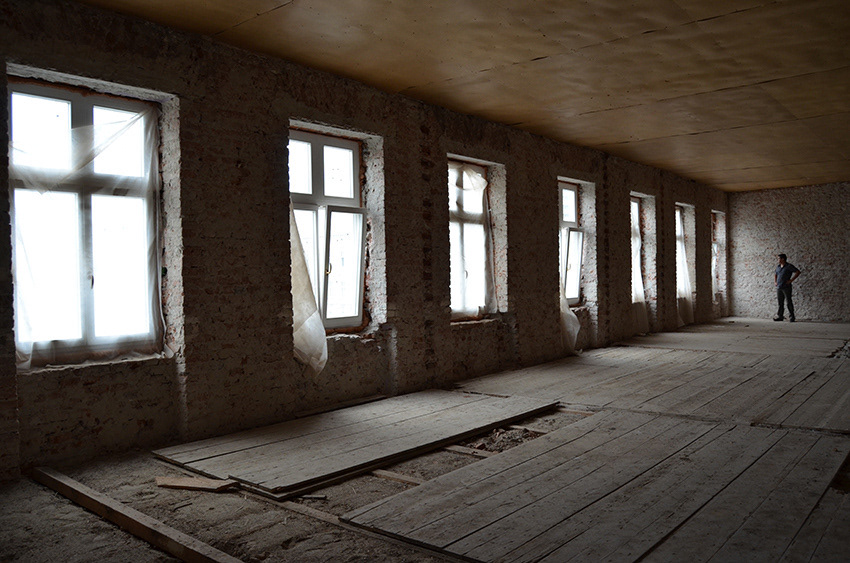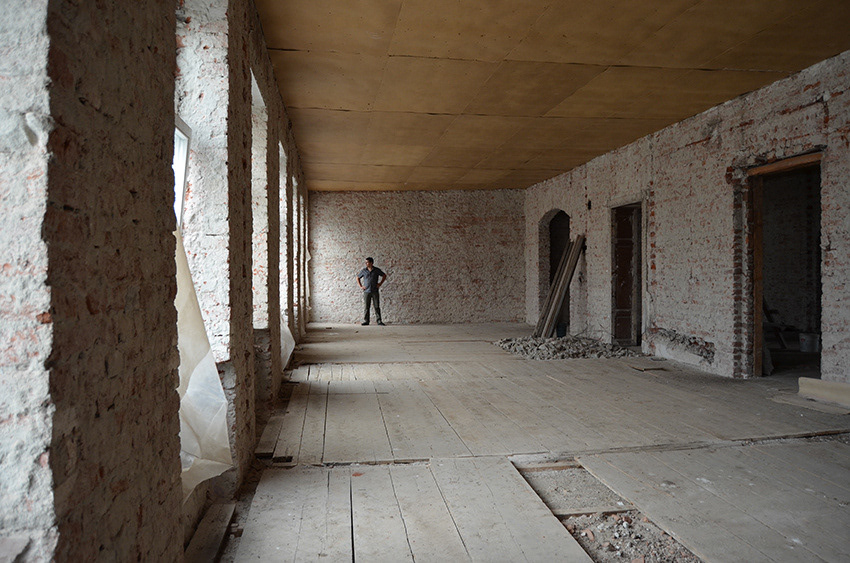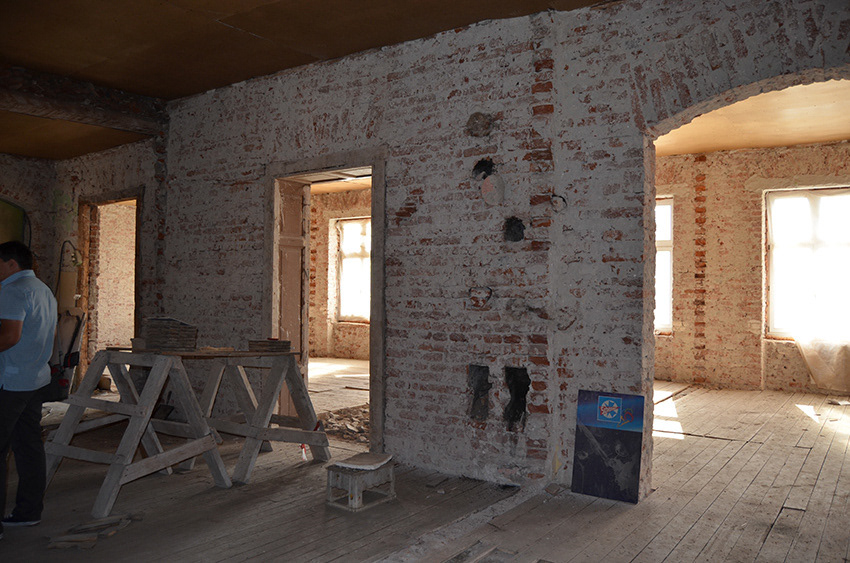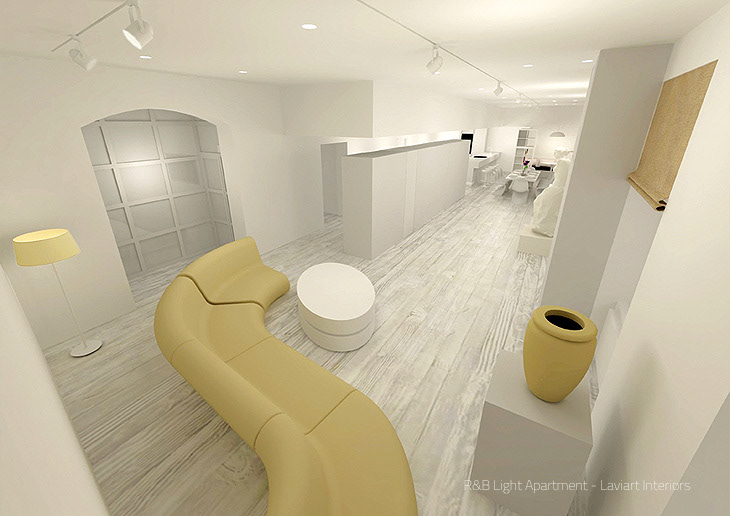
This project was exceptional in several ways. Located in Arad, in western Romania, the apartment sits directly across from the City Hall, inside a century-old building constructed with a solid framework of timber beams and red brick.
The clients’ requirements were clear and allowed us to shape a well-defined design brief:
Laviart was asked to develop two completely different design concepts: a high-end, all-inclusive residential layout that could be easily converted into an art gallery, and an office layout suitable for a creative agency in the city center.
The space needed to remain easily reconfigurable, allowing its function to change at any moment with minimal effort.
All furniture had to be sourced from a single producer, as the clients are strong admirers of the brand.
We needed a system that preserved the openness and generous volume of the room while incorporating customizable modules adjustable in real time.
Maximizing natural light was essential wherever possible.
The design had to be extremely minimalist, with the ability to evolve as future needs changed.
The space had to remain flexible, without heavy partitioning.
The existing plumbing layout had to be integrated seamlessly into the final design.
And finally, we needed to provide as much storage capacity as possible.
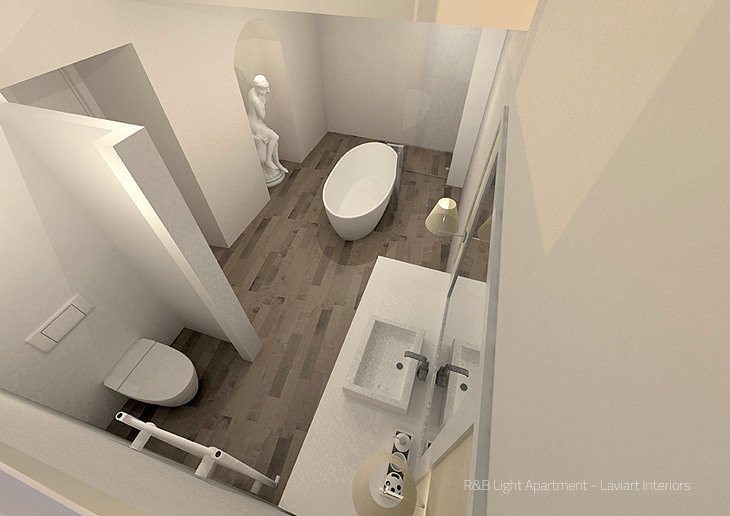
Our proposed solution:
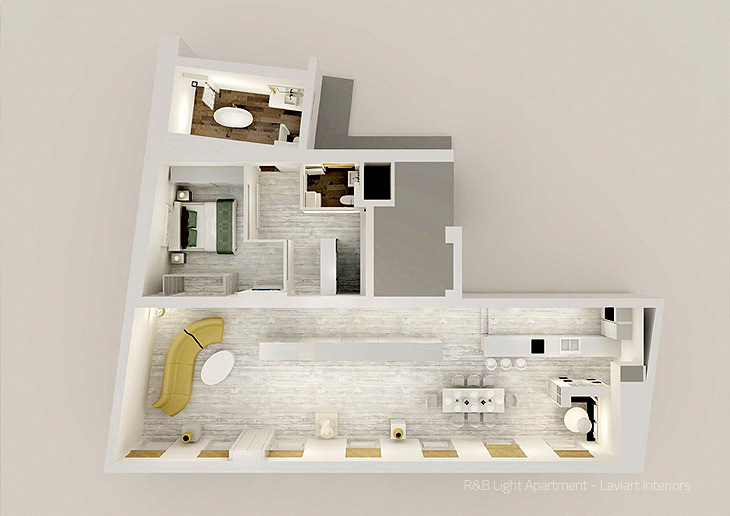
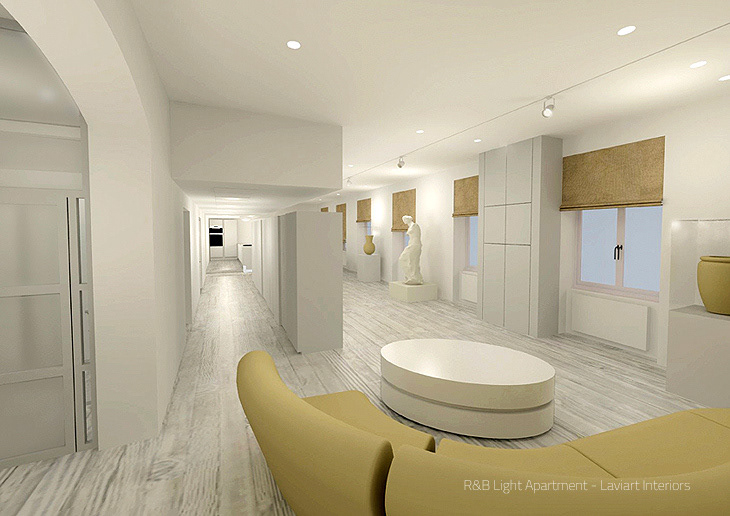
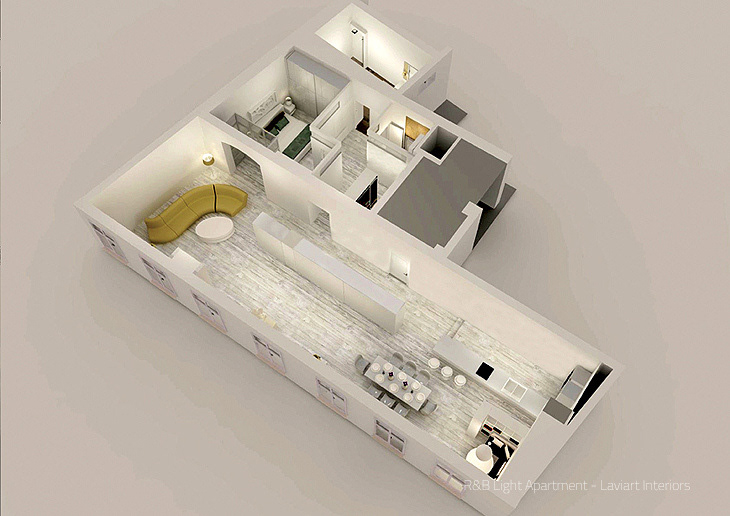
We implemented a storage system in the living area that also functions as a volumetric divider. It offers generous storage capacity and remains fully modular.
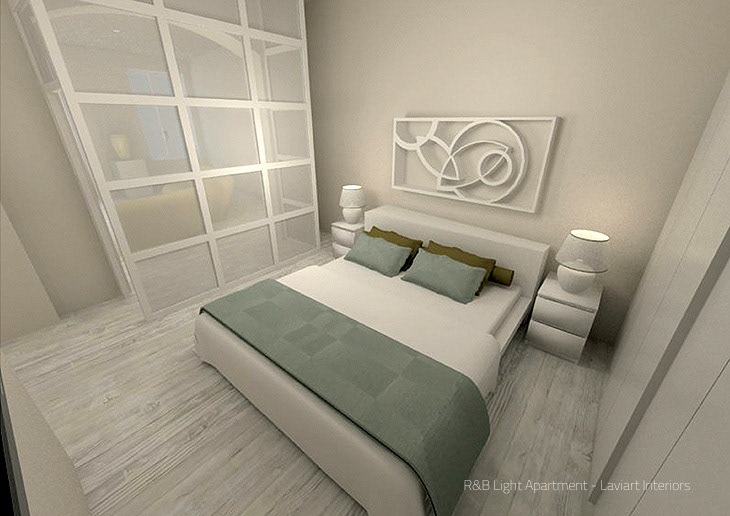
The sleeping area was enclosed with a semi-transparent partition while preserving the original architectural arch. Natural light continues to flow through the space, and privacy can be controlled via electrically operated blackout curtains, similar to stage drapes.
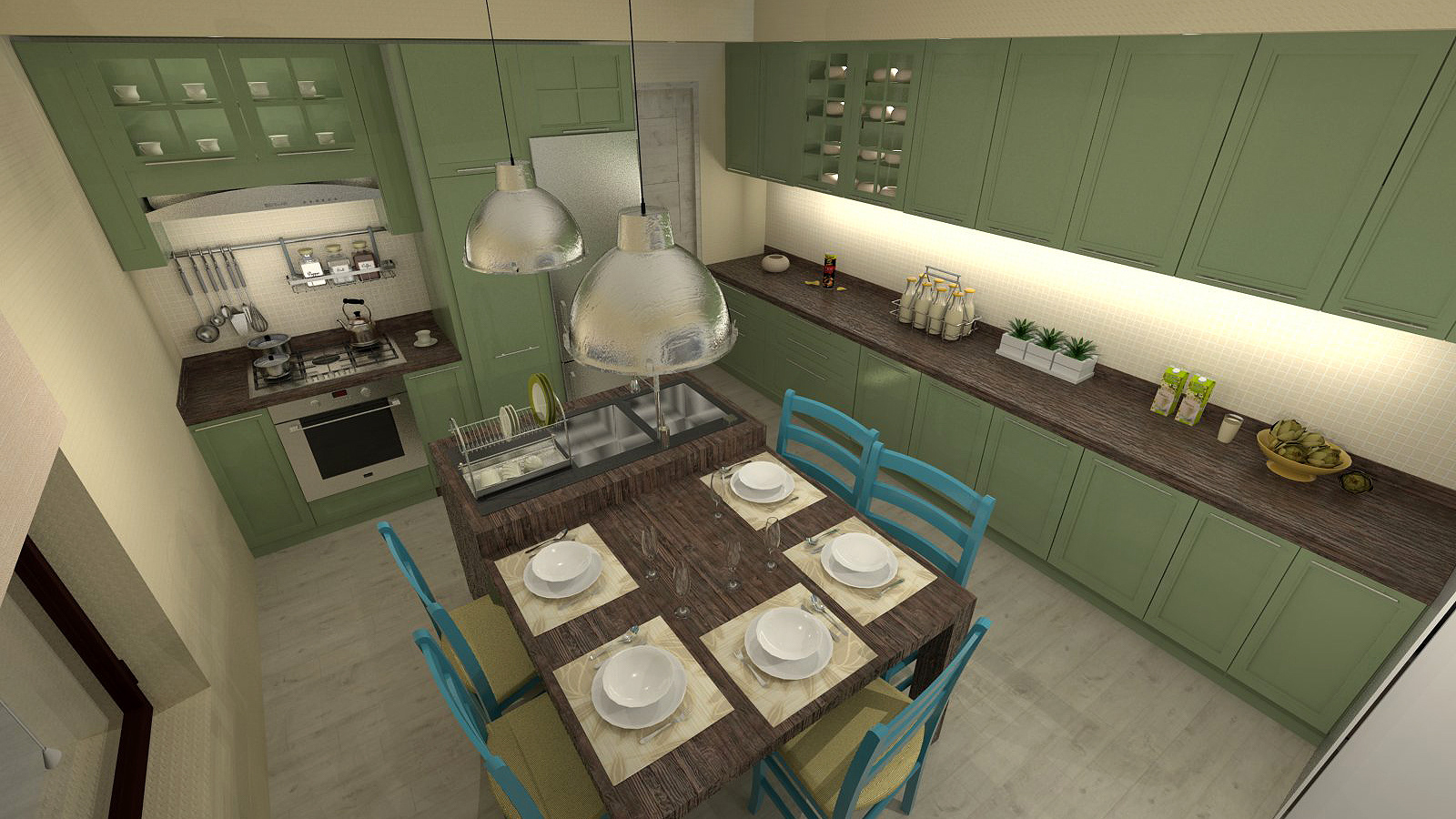
Due to the structure of the building, it was not possible to reroute the plumbing toward the kitchen while maintaining the necessary drainage slope. Therefore, we elevated the kitchen floor to ensure proper water flow — a solution made possible by the apartment’s generous ceiling height.
Because the rear section of the apartment receives limited natural light due to the existing architecture of the building, and since exterior wall openings could not be modified in order to preserve the historical façade, we had to work exclusively with the original window placement. To bring natural light deeper into the interior, we incorporated clerestory windows (upper-wall light openings) above the new partition walls. These allow daylight to travel further into the apartment, enhancing visual comfort without compromising the building’s heritage.
In the kitchen, we added a folding faucet that allows the countertop area to maintain a seamless, uniform appearance when needed. We also integrated an adaptable lighting system with adjustable, repositionable fixtures to suit different scenarios.
Before